 |
 |
What
Others Say About ETAN
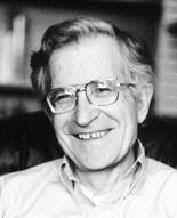
| ETAN is "A voice of reason, criticizing
the administration's reluctance to address
ongoing human rights violations and escalating
oppression in West Papua and against religious
minorities throughout Indonesia." —
Noam Chomsky |
 |
 "I’ve
long admired ETAN’s work. For well over
a decade, ETAN has conducted some
of the most effective
grassroots campaigns I
know. With limited resources, they helped free a
nation and
fundamentally changed
policy toward one of the
U.S.’s closest and most repressive allies,
Indonesia." "I’ve
long admired ETAN’s work. For well over
a decade, ETAN has conducted some
of the most effective
grassroots campaigns I
know. With limited resources, they helped free a
nation and
fundamentally changed
policy toward one of the
U.S.’s closest and most repressive allies,
Indonesia."
— Amy Goodman, host of “Democracy Now!
|
Having campaigned for Timor-Leste's
independence for many decades, and as President
of the Democratic Republic of Timor-Leste
for the last five years, I know that ETAN
(East Timor and Indonesia Action
Network) has consistently supported our
people during bad and good times.
—
President Jose Ramos-Horta
|
 |
 "ETAN
has done more for U.S. national security than several
divisions of the U.S. army and more for human rights
than the entire State
Department." "ETAN
has done more for U.S. national security than several
divisions of the U.S. army and more for human rights
than the entire State
Department."
— Caleb Rossiter, former
Congressional Aide; longtime
activist for arms
control and disarmament (Feb. 2001)
|
|
 "As
it should be, custody of our democracy, our national conscience,
is by "As
it should be, custody of our democracy, our national conscience,
is by
no means the property of our legislature; it is shared
with a better informed and more watchful community, alerted
by the invaluable services of organizations like ETAN."
— James Dunn, author with four decades
of experience as an Australian foreign affairs official and
with UN agencies. He served as Australian consul in Portuguese
Timor. From 1971 to 1985 he worked as Foreign Affairs advisor
to the Federal Parliament of Australia. He was a 2000-2001 UNTAET
expert on crimes against humanity in East Timor.
 The
best means for readers to keep up to date with developments
in TImor-Leste is to subscribe to the news service of the
East Timor and Indonesia Action Network (ETAN).
This is a tremendous resource, run on shoestring... out of
an apartment in Brooklyn, New York. —Gordon Peake,
Beloved Land:
Stories, Struggles and Secrets from Timor-Leste The
best means for readers to keep up to date with developments
in TImor-Leste is to subscribe to the news service of the
East Timor and Indonesia Action Network (ETAN).
This is a tremendous resource, run on shoestring... out of
an apartment in Brooklyn, New York. —Gordon Peake,
Beloved Land:
Stories, Struggles and Secrets from Timor-Leste
Another main hub for international distributions of news
on east Timor and calls for action was the website of the US
based solidarity organisation ETAN (East Timor Action
Network). ETAN became renowned for having an impressive
number of international mailing list subscribers and for
holding one of the best Internet archives on East Timor...
'The wide spread and well-functioning network of local
solidarity groups became apparent when, in response to the
militia violence in 1999, thousands of protesters could be
mobilised at a moment's notice. In the United States ETAN
asked its supporters to telephone the White House to demand
international intervention in East Timor. The massive
response to this appeal caused the disconnection of several
of the White House's telephone lines.' — Annette Jansen,
Anti-genocide Activists and the Responsibility to
Protect, Routledge, 2017
A worldwide movement sprang up
in the aftermath of the [November 12, 1991 Santa Cruz] massacre
to demand freedom for East Timor. In the United States, the
East Timor Action Network was formed... Grassroots efforts resulted
in thousands of letters and phone calls to Congress. Military
assistance to Indonesia was cut back over its abuses in East
Timor against the wishes of successive Republican and Democratic
administrations." — Amy Goodman,
The Exception to the
Rulers
 Transnational advocacy networks: East Timor Action Network
is an awesome example in my view of what a very diverse and
highly mobilized movement did for self determination movement
in this country and elsewhere  using the media, using
political advocacy, using very creative non-violent direct action
tactics.
- Maria Stephan, Academic Advisor, International Center on Nonviolent
Conflict speaking at session on External Actors
at Fletcher Summer Institute for the Advanced Study of Nonviolent
Conflict, June 9, 2015. Video
here. Transnational advocacy networks: East Timor Action Network
is an awesome example in my view of what a very diverse and
highly mobilized movement did for self determination movement
in this country and elsewhere  using the media, using
political advocacy, using very creative non-violent direct action
tactics.
- Maria Stephan, Academic Advisor, International Center on Nonviolent
Conflict speaking at session on External Actors
at Fletcher Summer Institute for the Advanced Study of Nonviolent
Conflict, June 9, 2015. Video
here.
Indonesia's former foreign
minister "said the case of Timor Leste showed that Indonesia
should never underestimate the power of non-governmental organizations
when they united behind a particular cause. They could influence
their respective governments, he added, and had showed that
Timor Leste
was not 'a mere pebble anymore but became something
that burdened Indonesia.'"
—
The Jakarta Post.
August 10, 2006
 |
I do really appreciate your
campaign to release political prisoners in Papua.
Please send my regard to ETAN comrades. One day
I believe I will be free. Visiting ETAN comrades
will be my priority. -- Filep Karma |
"Wolfowitz
background exposed. For those who think that the announcements
by Bush and Wolfowitz on Wednesday may have glossed over some
of the more interesting aspects of his track record, help is
at hand. We can recommend articles in the Village Voice, the
Asia Times, the East Timor Action Network, and Indonesia
Alert."
www.worldbankpresident.org
web site (March 18, 2005)
"[T]he East Timor Action
Network in the US... exercises strong
lobbying power in Washington."
- "Timor Explores New Boundaries,"
Australian Financial Review, March 25, 2004
(quoted on the floor of the Australian Senate)
 |
Take the East Timor Action Network.
I've experienced the impact of this grassroots organizing
firsthand. Today I am very active in my support of the
people of East Timor, who for years have suffocated
under Indonesia's brutal repression. But I hadn't always
planned to become involved in East Timor, because I
wasn't always aware of the situation there. But then,
more than seven years ago, the Madison, Wisconsin, chapter
of the East Timor Action Network - ETAN - brought
the plight of the East Timorese people to my attention.
— Senator Russell Feingold
at
Brown University,
March 17, 2000
|
[In 1999] a really significant
source of pressure was the US Congress, where many senators
and representatives were urging immediate action. All of the
years of lobbying by undertaken by US activists were paying
off.
— Clinton Fernandes,
Reluctant
Saviour
 |
[ETAN] is a US-based organization,
with a vast array of links, articles and information
on current issues.
— Lonely Planet Guide for
Timor-Leste (East Timor)
|
ETAN began in the USA in response to the
Santa Cruz massacre and soon became
a key reference point
for international East Timor activism and advocacy.
—
Timor Archives
ETAN - has been one of the most influential
of the grassroots support and lobby groups that have taken up
the cause of the East Timorese people to end the horrific abuses,
to end the illegal occupation, and to assist the new nation
of Timor-Leste on its course through independence.
— Peter
Cronau is an Australian-based journalist specialising in Pacific
affairs. He is a co-founder of Pacific Media Watch. He is a
Gold Walkley Award-winning (2006) producer and researcher.

"To the international solidarity we
extend a profound word of thanks from our people. We continue
to count on you to receive other forms of support, geared towards
alleviating the hardships of our most needy populations and
to the strengthening of the ties of friendship among people."
— President Xanana Gusmao's
Inaugural Speech, May 20, 2002
| In 2012, a now-high ranking State Department
official recalled her time as a human rights officer
in Washington more than a decade before. She described
ETAN as “punching above its weight” in revealing
ongoing Pentagon training of Indonesian soldiers,
leading Congress and the State Department to cancel
the program. She said that she often uses ETAN as
an example of effective citizen action, and that
our work in the 1990s has had lasting, worldwide
impact in curtailing U.S. training for armies which
violate human rights. |
ETAN began
in the USA in response to the Santa Cruz massacre and soon became
a key reference point for international East Timor activism
and advocacy. -
Timor Archives, CHART
 "ETAN
deserves all the support we can give it. In the past it played
a key role in bringing about international involvement in East
Timor, and since then has kept us well informed, a role increasingly
important now that East Timor not longer has a high profile
internationally. In fact the continuation of
its news service
is very important backing for the new nation, on its long, and
hard, journey to its leaders' goals of independence, prosperity,
social harmony and an enduring and stable relationship with
Indonesia." — James Dunn, December
2003 "ETAN
deserves all the support we can give it. In the past it played
a key role in bringing about international involvement in East
Timor, and since then has kept us well informed, a role increasingly
important now that East Timor not longer has a high profile
internationally. In fact the continuation of
its news service
is very important backing for the new nation, on its long, and
hard, journey to its leaders' goals of independence, prosperity,
social harmony and an enduring and stable relationship with
Indonesia." — James Dunn, December
2003
|
 "Apart
from official Washington, the American people have been
a reliable friend of the East Timorese. Americans established
the East Timor Action Network, participated in
Peace Brigades International, dedicated their personal
savings through individual foundations and trusts--all
with the goal of helping the East Timorese people overcome
great odds. Americans gathered in living rooms and lecture
halls throughout the country to learn the truths about
the oppression of East Timor ; they demonstrated on
sidewalks and lobbied their Congress, they met with
newspaper editors and other journalists in order to
bring out the truth; and a few brave Americans sacrificed
their personal safety in East Timor to shed light on
the reality of Indonesian government oppression."
— Rep.
Dennis Kucinich (D-OH) "Apart
from official Washington, the American people have been
a reliable friend of the East Timorese. Americans established
the East Timor Action Network, participated in
Peace Brigades International, dedicated their personal
savings through individual foundations and trusts--all
with the goal of helping the East Timorese people overcome
great odds. Americans gathered in living rooms and lecture
halls throughout the country to learn the truths about
the oppression of East Timor ; they demonstrated on
sidewalks and lobbied their Congress, they met with
newspaper editors and other journalists in order to
bring out the truth; and a few brave Americans sacrificed
their personal safety in East Timor to shed light on
the reality of Indonesian government oppression."
— Rep.
Dennis Kucinich (D-OH)
 |
Then and now,
even ETAN's critics acknowledged (sometimes
grudgingly) that its carefully researched
analysis and advocacy could not be factually
faulted. My contacts in government indicate
that the current administration retains
that same level of respect for the credibility
and effectiveness of ETAN's articulate advocacy. A
recent nominee for a senior State Department
position with responsibility for Indonesia
was cautioned by colleagues, "You don't
want to get on the wrong side of these guys."
My own conversion to in-house critic
of the policy of cooperation with the Indonesian
military at the Embassy was heavily influenced
by my contacts with ETAN and conversations
with members I met as I travelled through
Indonesia and East Timor.
—
Ed McWilliams, Senior Foreign Service Officer
(Retired),
Political Counselor. U.S.
Embassy in Jakarta
|
|
 |
"For years,
Washington insiders said it could never happen, as administration
after administration actively assisted the Indonesian
occupation of East Timor. I think you'll agree with
me that the East Timor Action Network (ETAN)
not only proved that independence for East Timor was
possible but helped make it happen. ETAN harnessed the
power of ordinary people in the United States -- people
like you and me -- to redirect the policy of the most
powerful government in the world. I can't think of a
better recent example of grassroots action changing
U.S. foreign policy."
— Howard Zinn, historian (December
2002) |
“ETAN channeled our voices of opposition
to U.S. policies blocking East Timorese self-determination,
and in so doing became a powerful force for change.” - Noam
Chomsky, MIT Professor of Linguistics
and long-time supporter of East Timor
(December 2001)
After the November 1991 Santa Cruz massacre..., U.S.-based
sympathizers coalesced into the East Timor Action Network
(ETAN) in New York City with affiliated cells across the
United States.With active financial and intellectual
support of the preceding activists CharlesScheiner and John
M. Miller mobilized a grassroots avalanche of direct appeals
and direct lobbying of U.S. Congress. So astounding was
their success that ETAN widespread recognition, including
from celebrated American author Howard Zinn...
-Professor
Awet Tewelde Weldemichael,
Third World
Colonialism and Strategies of Liberation: Eritrea and East
Timor Compared
"These corporations are worried
that a handful of U.S. activists--led by the East Timor Action
Network and investigative reporter Allan Nairn--will overturn
the U.S. policy of constant support for Suharto."
— Progressive Magazine,
May 1997.
 |
“The progress in American policy
is a direct result of the grassroots work of the East
Timor Action Network. By keeping the issue in
the media and keeping policymakers aware that voters
are watching, ETAN has helped to shift Washington’s
perspective. ETAN’s work with Congress, in particular,
has developed a constituency which does not let Pentagon
officials and State Department desk officers proceed
with business as usual."
— José Ramos
Horta, Nobel Laureate (July
1998)
|
|
“East Timor will not follow the path
of those in Nicaragua or Mozambique who believed that
international activist support was no longer important
once independence had been achieved. We have waged East
Timor’s struggle with the help of concerned people from
around the world, and we will continue to remember and
rely on you in this new phase of East Timor’s history.”
— José Ramos Horta, letter to Utrecht International
Solidarity Conference, May 2000
|
"Though it can't take credit
for the event, the fall of Indonesian dictator made 1998 an
especially sweet year for the East Timor Action Network.
The Network, which fights for self-determination for East Timor
- which was invaded by Indonesia, with US backing, in 1975 --
can take more direct credit for some important victories in
Washington."
—Ten Groups
Who Make a Difference (Counterpunch)
December 1998
"I don' recall
in my work as a writer/researcher ever having found a site like
etan.org which is as thorough, resourceful,
accessible and detailed as yours (and I have been on many!).
— Manfred Becker, filmmaker
"Nonviolent
direct action in support of East Timor’s independence assumed
a transnational character. In the United States, the East Timor
Action Network, a network of human rights organizations,
religious groups, and other grassroots organizations created
after the Dili massacre, successfully pressured the U.S. government
to stop providing Indonesia with military aid and training until
it ended the human rights abuses in East Timor and allowed self-determination
there. In 1992 the U.S. Congress passed
a resolution cutting International Military Education Training
(IMET) funding to Indonesia, despite a strong effort by Jakarta’s
corporate allies to block the resolution. The State Department
blocked the transfer of F-5s to Indonesia, and in 1994 Congress
passed a law banning the sale of small arms to Indonesia. Although
the Clinton White House continued to sell arms to Indonesia
(and for a period of time reinstituted IMET), sustained grassroots
pressure made East Timor a central issue in U.S.-Indonesian
relations." —
Maria Stephan and Erica Chenoweth,"Why
Civil Resistance Works: The Strategic Logic of Nonviolent Conflict,"
International Security, volume 33, issue 1, pages
7-44, Summer 2008
I would also like to take the opportunity to
thank you for the wonderful service you provide to us all; the
sharing of information
is crucial to all of us involved in/ with Timor-Leste and we
would be lost without ETAN! — Siobhan
|
|